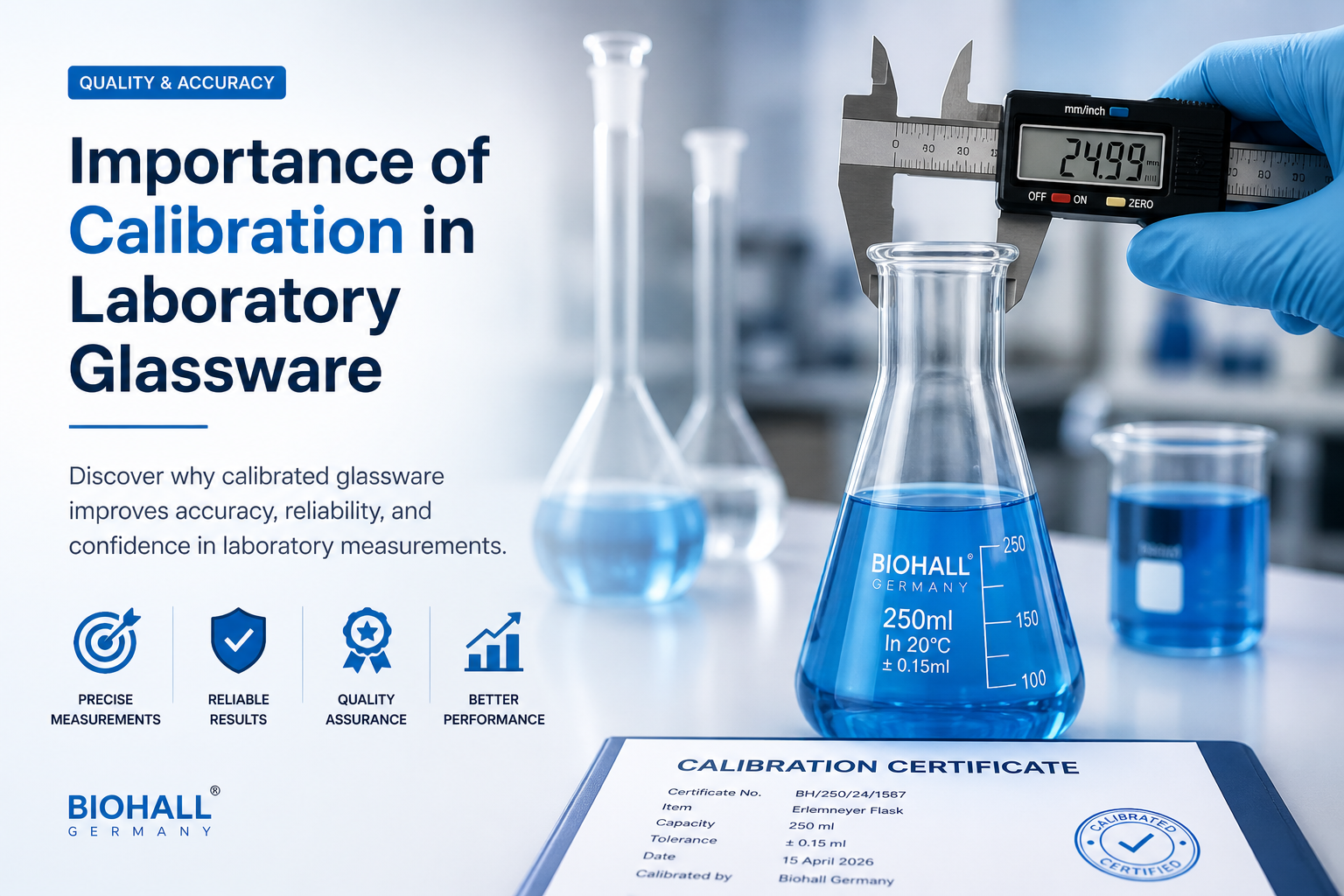
Why calibrated glassware improves accuracy, reliability, and confidence in laboratory measurements
INTRODUCTION
Calibration in laboratory glassware is essential for ensuring accurate and reliable measurement results in modern laboratories.
Calibration is a critical factor in ensuring accuracy in laboratory operations. Using properly calibrated laboratory glassware helps laboratories maintain precision, consistency, and compliance in every measurement.
For distributors and procurement teams, working with reliable suppliers ensures that each product meets strict calibration standards required for modern laboratory environments. Using calibrated glassware improves laboratory accuracy and ensures consistent experimental results.
WHAT IS CALIBRATION IN LABORATORY GLASSWARE?
Calibration is the process of verifying that laboratory glassware measures volume accurately according to defined standards.
This includes instruments such as volumetric flasks, burettes, pipettes, and graduated cylinders. Proper calibration ensures that the measurements taken during experiments are accurate and repeatable.
WHY CALIBRATION IS IMPORTANT
Calibration plays a vital role in laboratory performance. It ensures accurate measurements, consistent results, reduced experimental errors, and compliance with global standards. Using calibrated glassware improves laboratory accuracy and ensures consistent experimental results.
Without proper calibration, even high-quality glassware can produce unreliable data, which can affect research outcomes and product quality.
CLASS A VS CLASS B GLASSWARE
Laboratory glassware is generally classified into Class A and Class B categories.
Class A glassware is designed for high precision and is used in critical applications where accuracy is essential. Class B glassware is suitable for general laboratory use where minor variations are acceptable.
Understanding this difference helps in selecting the right glassware based on application needs.
CALIBRATION STANDARDS & COMPLIANCE
Reliable laboratory glassware must comply with international standards such as ISO, DIN, and ASTM.
These certifications ensure that the glassware has been tested for accuracy and meets global quality requirements. Compliance also improves trust and acceptance in international markets.
MATERIAL MATTERS: BOROSILICATE GLASS
The accuracy of calibration also depends on the quality of the material used. Reliable lab glassware manufacturers focus on strict calibration processes to maintain global quality standards.
Borosilicate glass is widely preferred because of its low thermal expansion, high chemical resistance, and long-term stability. These properties ensure that the glassware maintains its accuracy even under varying laboratory conditions.
QUICK CALIBRATION CHECKLIST
When selecting laboratory glassware, always check the calibration class (Class A or B), certification standards, clarity of markings, and material quality.
Also ensure that the supplier provides consistent manufacturing and reliable documentation for calibration. Reliable lab glassware manufacturers focus on strict calibration processes to maintain global quality standards.
FINAL THOUGHTS
Calibration is not optional—it is essential for achieving reliable and repeatable results in laboratory environments.
Choosing properly calibrated glassware helps improve measurement accuracy, reduces errors, and builds confidence in laboratory outcomes.
Choosing products with proper calibration in laboratory glassware ensures long-term reliability and measurement confidence. Using calibrated glassware improves laboratory accuracy and ensures consistent experimental results.
FAQ SECTION
What is calibration in laboratory glassware?
Calibration is the process of ensuring that glassware measures volume accurately according to defined standards.
Why is calibration important?
Calibration improves accuracy, reduces errors, and ensures reliable experimental results.
What is Class A glassware?
Class A glassware is high-precision calibrated glassware used in critical laboratory applications.
How often should glassware be calibrated?
Calibration frequency depends on usage, but regular checks are recommended for maintaining accuracy.
Calibration in laboratory glassware ensures accurate results and reliable measurements in laboratory applications.